
I recently joined the Chesapeake Region Lace Guild, just in time to attend the fall Lace Day. The vast majority of guild members make bobbin lace, but there is a small and growing contingency of needle lace makers in the group.
The Lace Day consisted of a keynote lecture about the history and development of lace collars followed by a series of member-led mini-workshops. I was most interested in the netmaking workshop – largely because I had never tried it before, but also because there is a common belief that Armenian needlelace descended from netmaking.
Alice Odian Kasparian wrote in Armenian Needlelace and Embroidery “It is safe to assume that the Armenian knotted needlace developed out of the earliest fish nets.” I accepted this when I read it. I’ve shared this piece of information with many other people, and I’ve heard others in the lacemaking community share it as well. Even Wikipedia makes this claim, albeit sourceless.
I went into this workshop eager to learn how Armenian needlelace came to descend from net making. After all, netted doilies, like the one below (belonging to the person who ran the workshop) look very much like needlelace doilies at first glance.
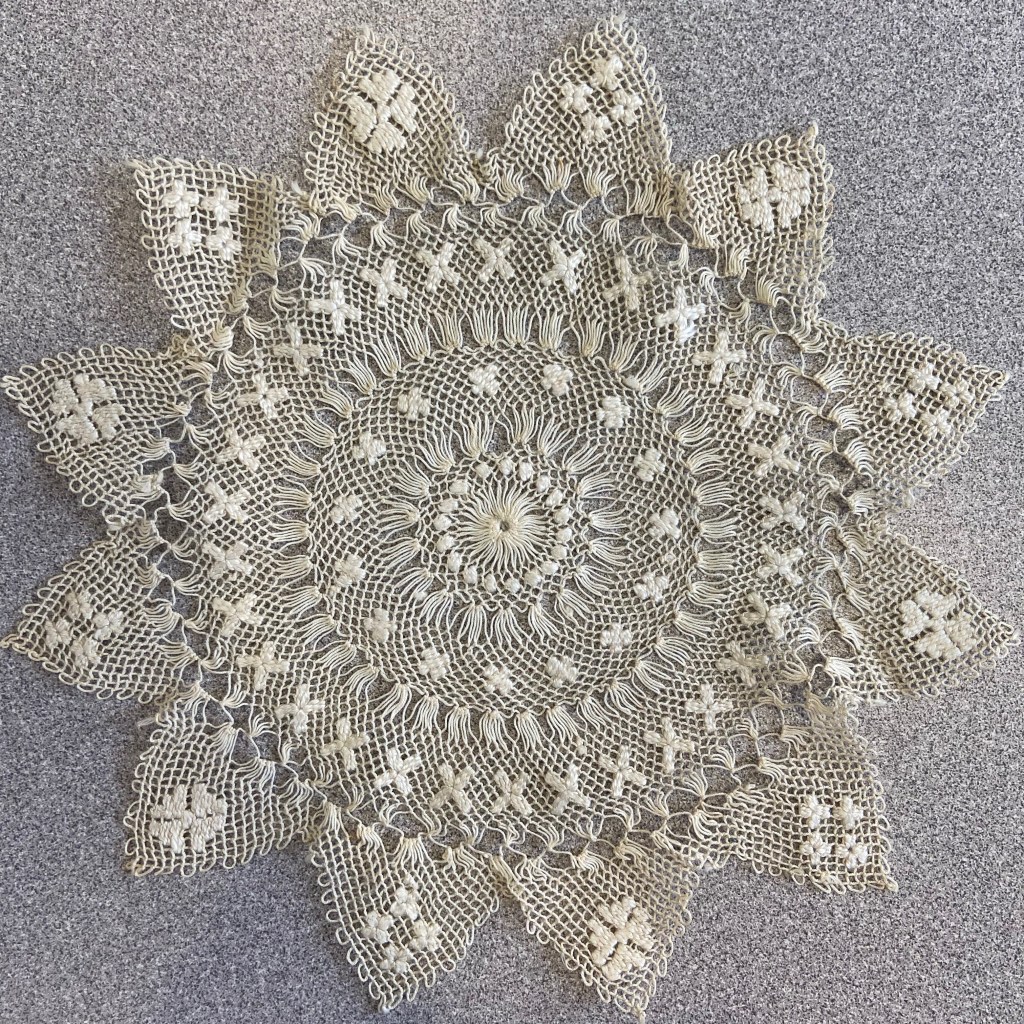
Many of the stylistic elements found in Armenian needlelace are also found in netted lace, including the basic small loop stitch, larger loops, and decorative patterns. There are some key differences: netting requires both a gauge and a netting needle or shuttle (though I think a bobbin could easily replace the shuttle); netting is worked towards the body whereas Armenian needlelace is worked away from the body; and finally, the decorative elements in netting are embroidered onto the net as in fillet lace rather than created during the knotting process.
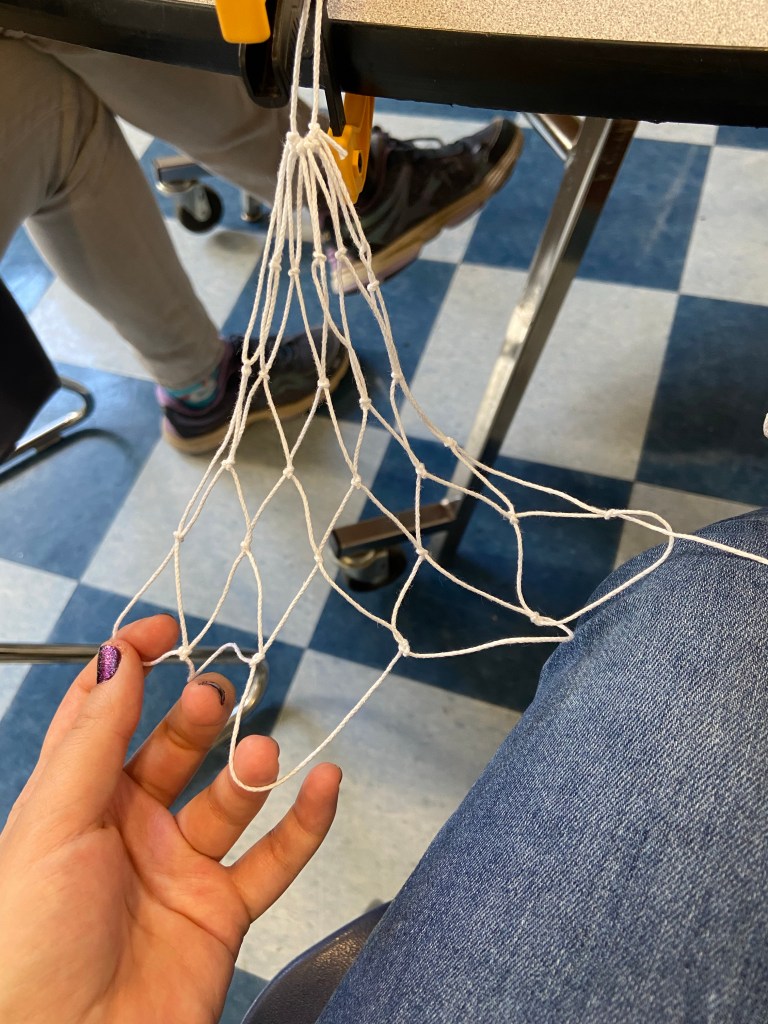
We used a large gauge and size 3 tatting thread during the workshop. It was unexpectedly very challenging as netting requires coordinated use of both hands and the shuttle motions are not intuitive. It broke my brain even when the instructor demonstrated right next to me.
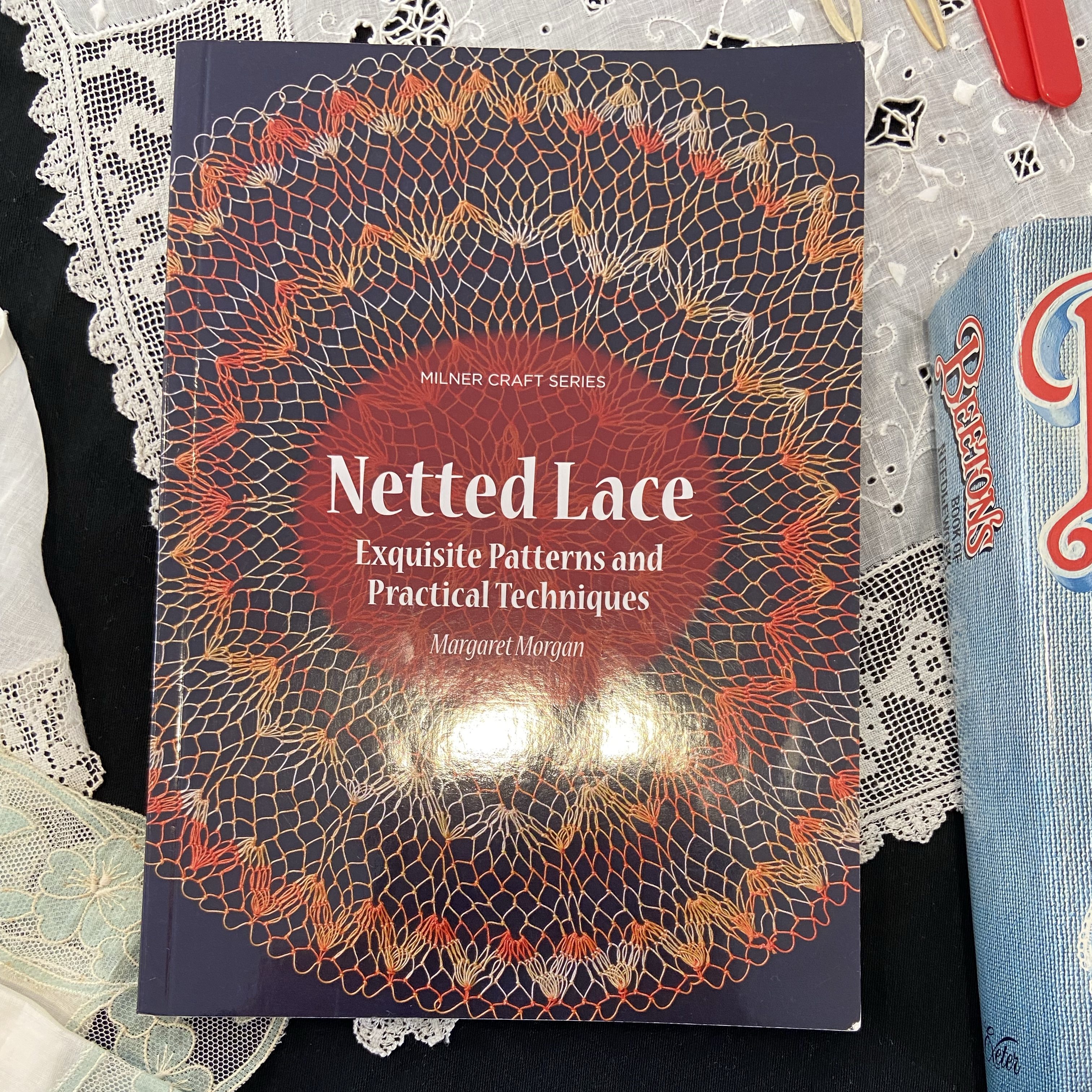
After this workshop, I’m less confident about the statement that Armenian needlelace definitely descended from netmaking. I’m not saying it’s not true, but I want to do more research. The instructor recommended a book that looks very interesting. I definitely do not need another hobby but I think this would be a good read and perhaps provide more clarity on the transition from netting to Armenian needlelace.
The other outcome of joining CRLG and going to Lace Day is that I have been inspired to get out of my doily rut and try new and more creative techniques with my lace. I have a few ideas I’m trying out, so stay tuned.

 Digin Haiganoush